
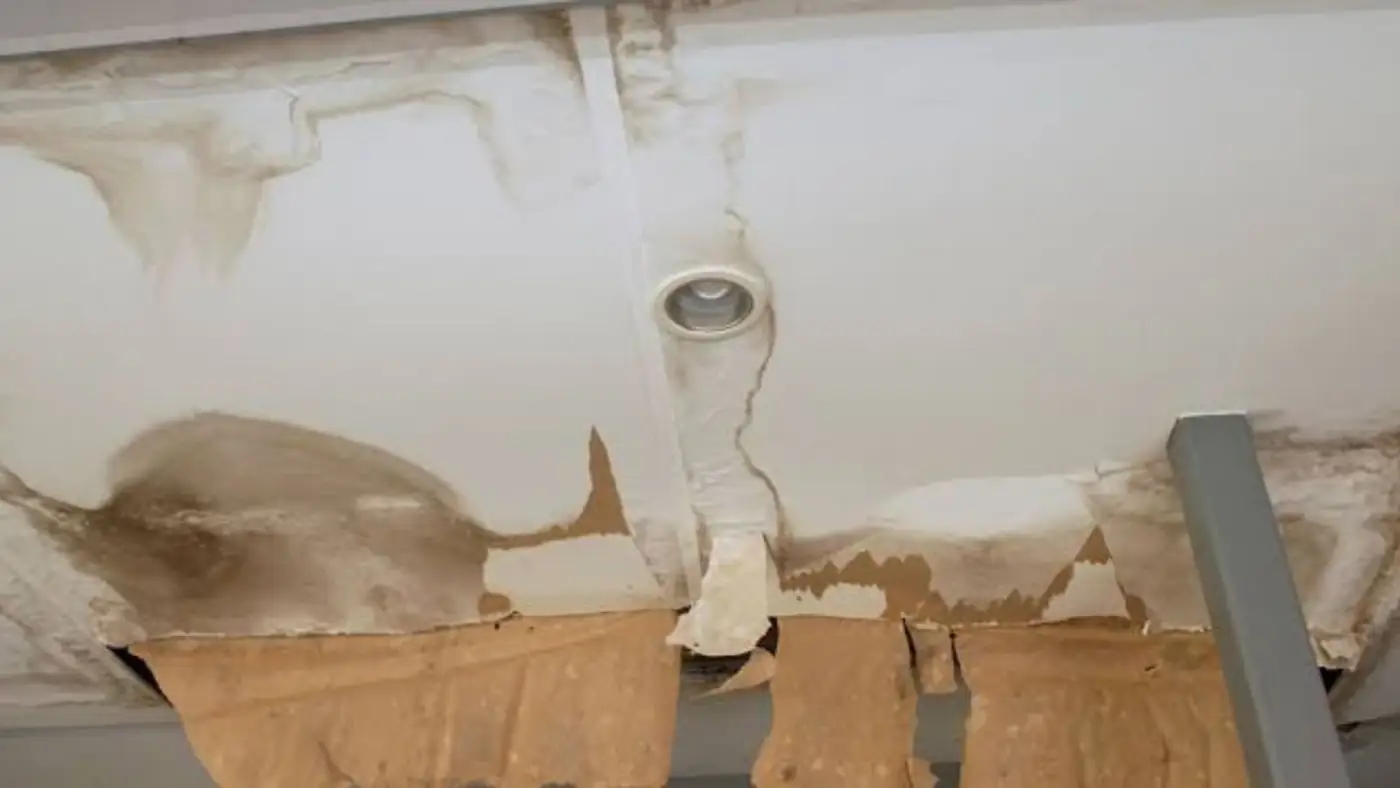
A brown stain under the attic unit
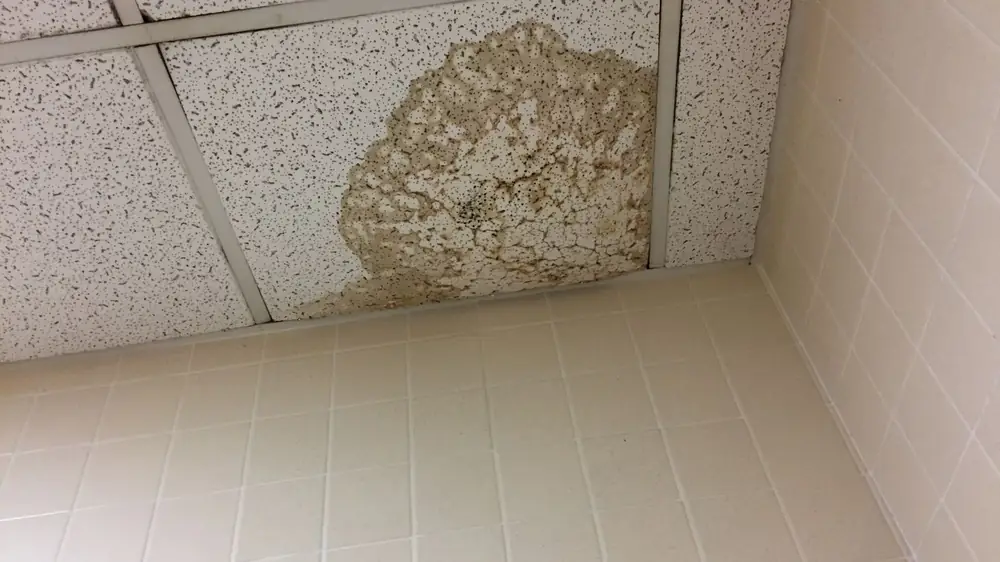
You notice a tan ring on the hall ceiling, then a drip, then a soft spot in the drywall. If the air handler sits in the attic above, an AC leak is a likely suspect. Air conditioners pull moisture out of the air, and that water must exit through a drain line. When the line clogs or the pan cracks, the water goes into your ceiling instead.
The leak may be slow. A cup of water a day is easy to miss until the stain appears. By then the insulation above the drywall is often saturated. A closet unit works the same way, only the water runs down the wall and into the baseboard and carpet instead of the ceiling.
Where the water comes from
Clogged condensate line
Algae and sludge build up in the small drain pipe. Water backs up into the pan and spills over.
Cracked or rusted pan
Old metal pans corrode, and the secondary pan under an attic unit can crack or sit unevenly.
Frozen evaporator coil
A dirty filter or low airflow can ice the coil. When it thaws, it sends more water than the pan can handle.
Disconnected or sagging drain
A line that has come loose or lost its slope cannot carry water away.
Failed float switch
The safety device that should have shut the system off did not trip, so the leak kept running.
What the drip pan float switch does
Many systems have a float switch in the drain line or pan. When water rises to a set level, the switch cuts power to the outdoor unit so the system stops making more condensate. If your AC will not run and the thermostat looks fine, a tripped switch may be why.
Do not bypass it to get cooling back. The switch is warning you that the line is blocked. A technician should clear the line and test the switch.
Short-term steps to limit the damage
Turn the system off
Switch the thermostat to off so the unit stops producing water. Keep the fan off too if water is still dripping.
Cut power only if safe
If the unit or ceiling is wet near electrical parts, do not touch it. Shut off the dedicated breaker only if the panel is dry and safe. Call 911 or the utility for any electrical risk.
Catch and soak up water
Set buckets under drips and move furniture. Keep people out from under a bulging ceiling, because it can release a lot of water at once.
Photograph and call
Photograph the stain and the unit. Call your HVAC contractor for the unit and us for the wet structure.
Ceiling wet or sagging?
Call (818) 337-2642 any hour. Same-day response when available.
Cooling season and condensate lines in the Valley
Studio City sits in the southeast San Fernando Valley, where the cooling season runs for months. That means condensate lines are working for months at a time, not for a few weeks, and a partial clog has a long runway to cause damage.
Ask your HVAC contractor about the drain line and the pan at the start of the season. Ask whether a secondary pan and a float switch are installed, and have them confirm the line has a proper slope. A short visit before summer costs far less than a wet ceiling in August.
Drying the ceiling cavity
A wet ceiling is more than a stain. Half-inch drywall absorbs water and softens, and the insulation above it can hold water against the back of the board. Our crews doing emergency water removal start with a moisture meter and a thermal camera to map how far the water went.
Small access holes may be cut so air movers can push dry air through the cavity, with a dehumidifier running in the room. Saturated insulation is usually removed. A ceiling that sags, has lost its texture or is soft to a finger press is usually cut out rather than dried in place.
Why a slow leak turns into mold
Attic cavities are warm, dark and quiet. Once drywall paper and insulation stay wet, you have what mold needs. The EPA says none of the many types of mold grow without moisture, and that wet areas dried in 24 to 48 hours usually will not grow mold.
A slow condensate leak rarely gets dried in that window, because nobody sees it. If the stain has been there for weeks, treat the area as possibly mold-affected. Our mold remediation page explains how that case differs.
Who handles what
The HVAC technician
Clears the drain line, replaces a cracked pan, tests or replaces the float switch and checks the coil and filter. This stops the leak.
The restoration crew
Dries the ceiling cavity, removes wet insulation and drywall that cannot be saved, and documents moisture readings.
The repair step
After the structure is dry, drywall, texture and paint are replaced. See our water damage repair work for how that fits in.
If you rent in North Hollywood, where about three quarters of housing was renter-occupied in the 2000 census, report any AC leak to your landlord right away. The EPA advises renters to report leaks immediately. Take photos before anyone patches the ceiling.
In Valley Village, with thousands of apartment units, a drip from a closet air handler can reach the unit below. Tell the building manager and the neighbor.
Can I pour bleach down the condensate line?
Ask your HVAC contractor before putting anything in the line. Some products damage parts or the pan. A technician can clear it with the right method.
My AC stopped working after a leak. Is the unit ruined?
Often the float switch shut it off, which means the system did its job. The line needs clearing. A technician should test everything before restarting.
How long does a wet ceiling take to dry?
It depends on how much water and how far it spread. Three to five days is typical for many jobs. Readings, not the calendar, decide when drying is done.
Does the long cooling season in the San Fernando Valley change how I should maintain my AC?
It means the drain line is in use for months, so ask your HVAC contractor to check the line and pan before the season and to test the float switch. We repair the structure, not the unit.
Will insurance cover an AC leak?
It depends on your policy and whether the leak was sudden or gradual. Gradual leaks are often excluded. Document everything and ask your insurer.