
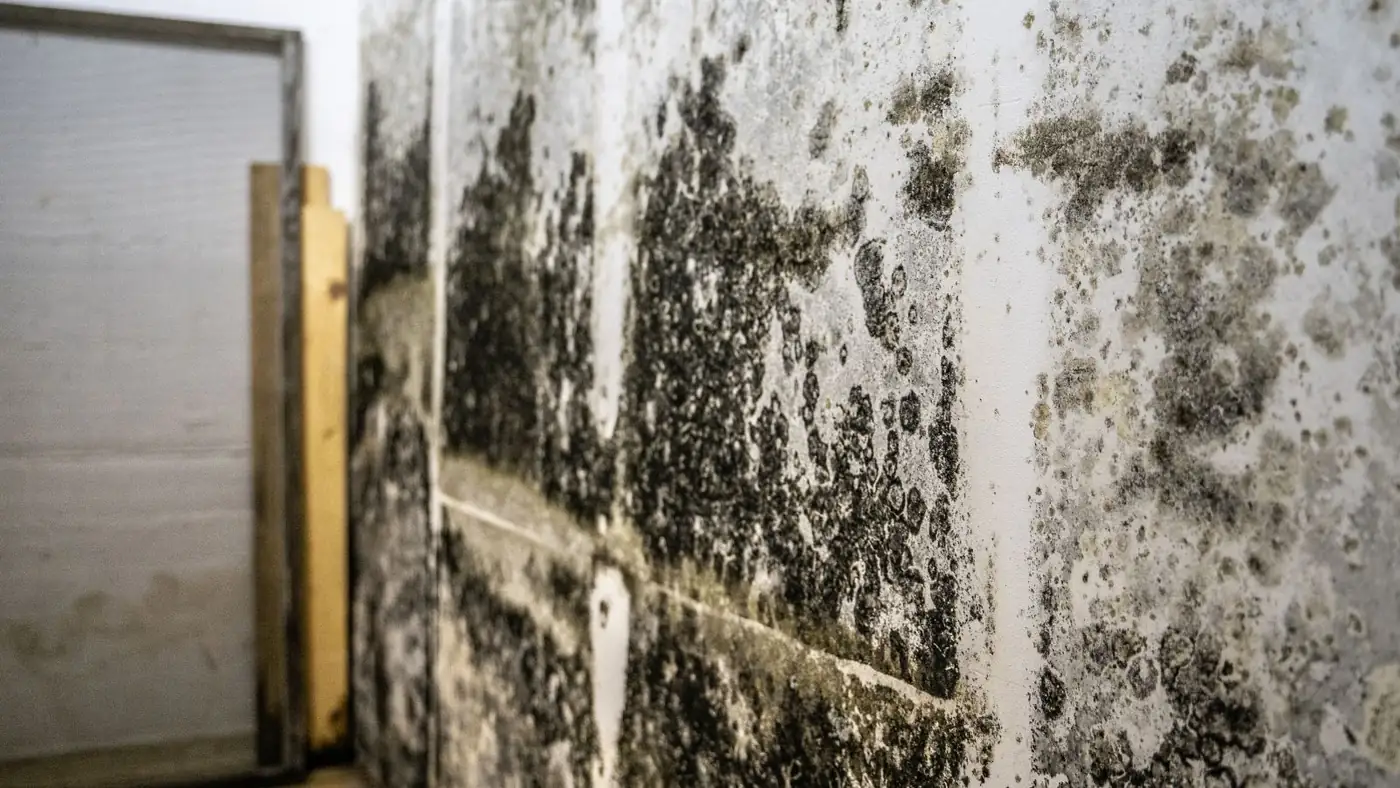
You open the door to the lower level and the air feels heavy. Cardboard boxes are soft at the corners, and there is a smell like wet paper. Basement mold control starts with one idea from the US EPA: the key to mold control is moisture control, because none of the many types of mold grow without water or moisture.
This applies to basements, lower levels, and below-grade or hillside garages with storage. It is a prevention guide, so most of it is about what you can measure and change this weekend.
Measure humidity before you guess
EPA advises keeping indoor relative humidity below 60 percent, ideally between 30 and 50 percent. You cannot judge that by feel. A small digital hygrometer costs little and tells you the number in any room.
Place it away from the exterior wall and check it morning and evening for a week. Lower levels often run higher than the floor above, so the number you see upstairs does not apply. Readings that sit near the top of the range or above it in summer or after rain deserve action.
Sizing a dehumidifier in plain words
Dehumidifiers are rated by how much water they pull from the air in a day, under set test conditions. Pick the rating by the size of the space and how damp it feels, then go one step larger if the area is very damp or has leaks. An undersized unit runs nonstop and never reaches the target.
Look for a built-in humidistat so it holds a set percentage, and a drain hose that runs to a floor drain or a condensate pump. Emptying a bucket daily is the step people stop doing. Put the unit near the middle of the room with doors closed, and keep the filter clean.
A dehumidifier treats the air, not the source. If the humidity climbs right back after a rainstorm, water is getting in and the fix is outside the machine. Keep reading.
Drainage and grading checks around the building
- Soil should slope away from the foundation. If it slopes toward the wall, water flows to the lowest room.
- Gutter downspouts should discharge well away from the building, not at the base of a wall.
- Irrigation heads should not spray the foundation or the garage door.
- Window wells and garage-door thresholds should be clear of leaves and silt.
- Planters and mulch should not touch the siding or stucco.
Do these checks during or just after a rain, when you can see where water pools. A dry day hides most grading problems.
Hillside runoff and low spots in Studio City
The Santa Monica Mountains border Studio City on the south, and canyon roads such as Laurel Canyon Boulevard and Coldwater Canyon Avenue come down to Ventura Boulevard. In heavy rain, water that runs down a slope can find its way to a garage door or a retaining wall at the bottom. If your home or garage sits below a road or hillside, walk the uphill side in the rain and clear drains and weep holes before the season starts.
North Hollywood's early fruit and nut orchards relied on a high water table near Tujunga Wash. That is history, not a current claim about your lot, but it is a good reason to check low spots and floor drains for damp soil or slow seepage. We dispatch crews to North Hollywood for lower-level moisture problems, and about three quarters of housing there was renter-occupied in the 2000 census, so if you rent, report leaks to the landlord right away.
Seeing growth or soft materials?
Call (818) 337-2642 and we will explain scope and price before work starts.
What a musty smell and other signs point to
| Symptom | Likely moisture source | First check |
|---|---|---|
| Musty smell with no visible growth. | High humidity or a hidden leak behind a wall. | Read the hygrometer, then feel along baseboards and wall bases for cool, damp spots. |
| White powder on masonry walls. | Water moving through the wall and leaving minerals. | Look outside for pooling water, bad grading or a downspout dumping near the wall. |
| Damp cardboard and paper boxes. | Humid air or condensation on the floor. | Lift a box and check the slab beneath for dampness. |
| Dark spots on the wall or ceiling. | Leak from a pipe above or condensation on a cold pipe. | Trace the pipe above the spot and check whether it is cold and sweating. |
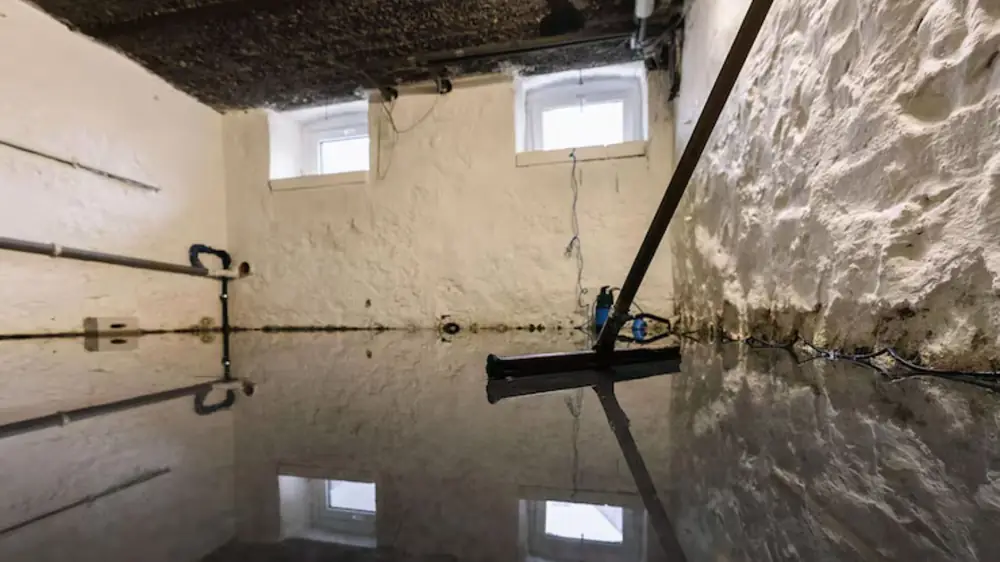
| Water at the floor edge after rain. | Runoff reaching the slab or a blocked drain. | Walk the outside uphill side during rain and clear drains. |
Color does not identify mold type. A smell or visible spot means find the moisture first.
Stored-items habits that reduce risk
Store things in lidded plastic bins, not cardboard, and set shelves a few inches off the floor and away from exterior walls. Air must move behind and around stored items. Fabric, paper, books and rugs hold moisture, so keep them upstairs if you can.
Once a season, move a few items and look behind them. Insulate cold water pipes to limit condensation, vent dryers and other moisture-producing appliances outdoors, and use exhaust fans where there is a bathroom or laundry. Encino has Los Encinos State Historic Park with a natural spring, and about 61.6 percent of its housing was owner-occupied in the 2000 census era source, so in Encino most of these upkeep tasks fall to the homeowner.
When to stop DIY
For mold on hard surfaces over an area smaller than about 10 square feet, EPA says the homeowner can usually handle it. Scrub with detergent and water and dry the area completely. Absorbent materials such as carpet and ceiling tiles may have to be thrown away if they become moldy.
For larger areas, heavy water damage, or sewage and other contaminated water, EPA points to professional help. Remediation by a qualified company follows the ANSI/IICRC S520 standard. Do not paint over growth, and do not seal a damp wall.
Stay out of standing water
If water covers outlets or reaches the panel, do not wade in. Cut power only if the panel is dry and safe to reach, and call 911 or the utility for electrical or gas risk before calling us.
Do not disturb big areas
Scraping or brushing large patches can spread material. Larger areas are for a trained crew with containment and a HEPA air scrubber.
Skip the test kit
EPA says sampling is usually unnecessary if growth is visible, and no federal limits exist for mold or spores. Find and fix the moisture instead.
Questions about health belong to a physician. For flooded lower levels, see flood damage restoration and remember that flood is usually excluded from homeowners policies, so ask your insurer what applies.
What humidity level should I aim for in a lower level?
EPA advises below 60 percent, ideally between 30 and 50 percent. Use a hygrometer, since a room can feel fine and still run high.
Can a dehumidifier alone fix a musty basement?
It helps if the moisture is in the air. If water enters through a wall, floor or pipe, the machine only treats the symptom, and the source must be fixed.
Does hillside runoff matter if my home is not on a slope?
It can. Water follows streets and driveways, so a garage at the bottom of a road that drains toward it can see runoff during heavy rain. Check where gutters, driveways and street water go.
Is the old orchard water table a reason to worry about my North Hollywood garage?
Only as a reminder. It is history, not a measurement of your lot. Check floor drains and low corners for damp soil, and ask a pro if you see seepage.
How big is too big to clean myself?
Under about 10 square feet on a hard surface is usually a DIY job per EPA. Larger patches, soft materials or any sewage-contaminated water call for professionals.