
What a crawl space is and why it stays damp
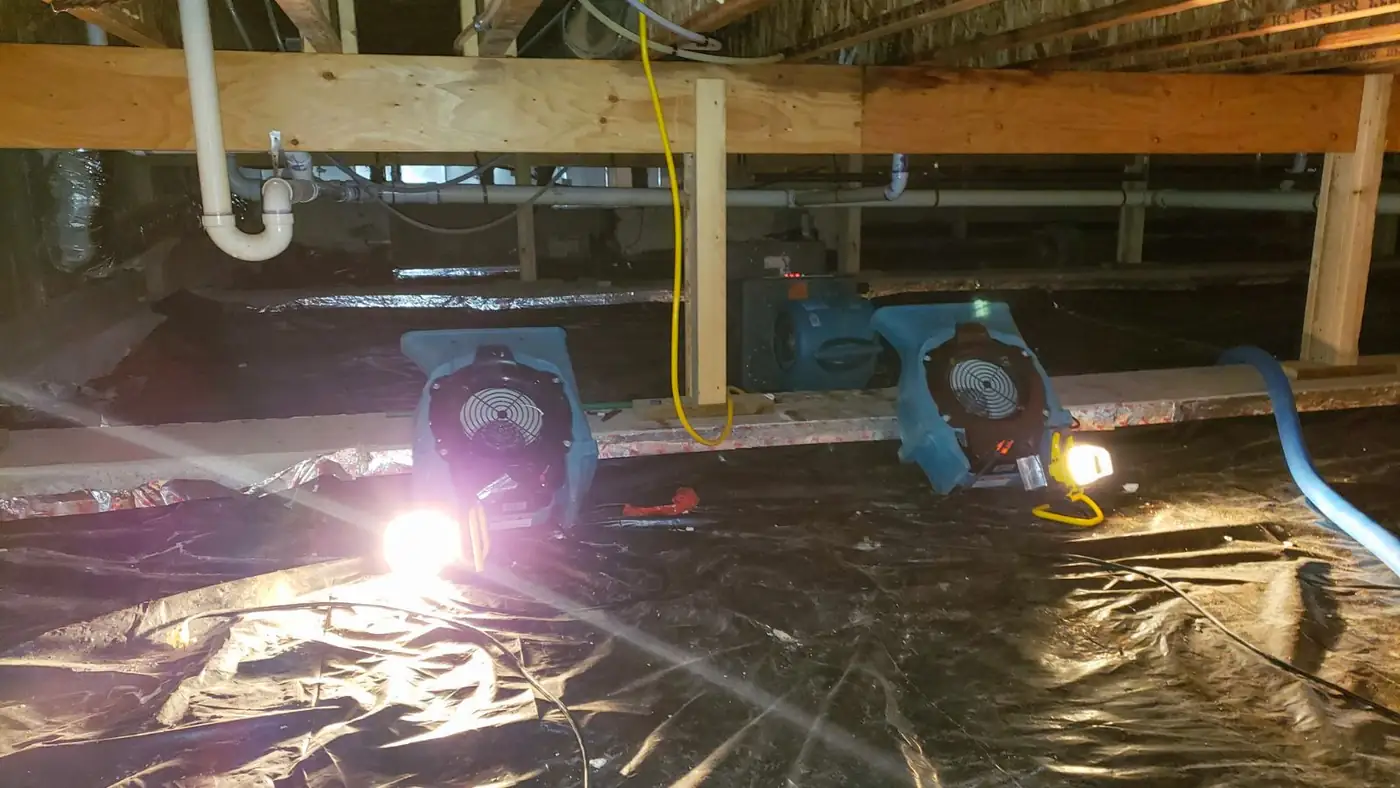
A crawl space is the shallow gap under a raised floor. Crawl space mold is mold growing on the wood framing, subfloor or insulation there because moisture has no easy way out. Not every house has one. Look for low vents on the exterior wall or an access hatch in a closet or hallway floor.
Four things feed dampness down there. Soil gives off water vapor. Leaking pipes drip from above. Rain can run toward the foundation. And humid air flows in through the vents and condenses on cooler surfaces such as pipes and ducts. The EPA is blunt about it: none of the many mold types grow without moisture.
A few plain-language terms
Vapor barrier
A sheet of heavy plastic over the soil that slows moisture rising from the ground. Torn or missing sections let vapor through.
Foundation vents
Small openings low on the exterior wall. They let air move, but in humid weather they can also bring in damp air.
Joists and subfloor
Joists are the horizontal beams that hold up the floor. The subfloor is the plywood or plank layer above them.
Insulation
Batts pressed against the underside of the floor. When wet they sag, hold water against the wood and can stay damp for weeks.
Water near wiring? Stay out
Standing water near wiring, outlets or a junction box is a shock risk. Do not enter. Cut power only if the panel is dry and safe to reach, and call 911 or the utility for any electrical or gas risk before calling us.
Sewage is a hard stop
If the water is gray, smells like sewage or came from a drain, keep out and keep children and pets away. It needs professional handling.
Tight space, poor air
Crawl spaces are cramped, dark and hard to leave quickly. A dust mask is not a substitute for proper gear and containment.
What you see, what it can mean
| What you see | What it can mean | Who to call or what to do |
|---|---|---|
| Standing water after rain. | Runoff, poor grading or a high water table moving under the house. | Check for wiring first. If it is safe, call us for an inspection. Ask a contractor about exterior drainage. |
| Water dripping from a pipe above. | A supply or drain line leak over the crawl space. | Shut off the water to that line and call a plumber. Call us for the wet structure. |
| White, fuzzy or dark patches on joists. | Surface growth on framing that stayed damp. Color does not identify the type. | Do not disturb it. Call for an assessment. The EPA advises professional help for larger areas. |
| Musty smell in rooms above. | Damp air moving up through the floor. | Open the hatch only if it is safe, or call us to check moisture levels. |
| Sagging, wet insulation. | Water or condensation soaked the batts. | Wet insulation usually has to be removed. Call a professional. |
| Springy or soft floor above. | Subfloor or joists may be wet or weakened. | Stay off the area and call right away. |
A restoration crew handles the wet and moldy structure. A plumber, drainage or HVAC contractor fixes the source.
What a restoration crew checks under the floor
The first job is safety and source. Our crews doing flood damage restoration check for wiring near water, sewage and structural issues before anyone starts work. Then comes a walk of the whole space with a moisture meter and a thermal camera.
- Joist and subfloor moisture readings, taken at several points and recorded.
- The vapor barrier: gaps, tears, and whether soil is wet or only damp.
- Plumbing lines, valves and the water heater location for any active drip.
- Vents, access doors and gutters or downspouts that dump water near the foundation.
- Insulation condition, ductwork and any sign of rodents or pests.
Need eyes under the floor?
Call (818) 337-2642 and we will explain the inspection and the plan before work starts.
Groundwater and hillsides around Studio City
Los Encinos State Historic Park in Encino is a 5-acre site with the de la Ossa Adobe, a pond and a natural spring. It is a useful reminder that groundwater near the surface exists in parts of the San Fernando Valley. For a crawl space, that means low areas can stay damp even when no pipe is leaking.
The Santa Monica Mountains border Studio City on the south, and canyon roads such as Laurel Canyon Boulevard and Coldwater Canyon Avenue come down to Ventura Boulevard. Lots at the foot of slopes deal with water that moves downhill. If your crawl space is damp after rain, ask whether grading and drainage outside the house direct water toward the foundation.
Cleaning versus removing joists and subfloor
Solid wood framing is often cleanable. Surface growth on a dry, sound joist is typically removed by HEPA vacuuming and by abrasive cleaning, such as wire brushing or sanding, then wiping the surface and drying it. The wood stays in place.
Removal is for materials that cannot be cleaned. Wet, matted insulation and a torn vapor barrier usually come out. Plywood subfloor that has delaminated, softened or rotted is replaced. A joist that has lost strength is a structural question for a contractor or engineer, not a cleaning job.
Containment during cleanup
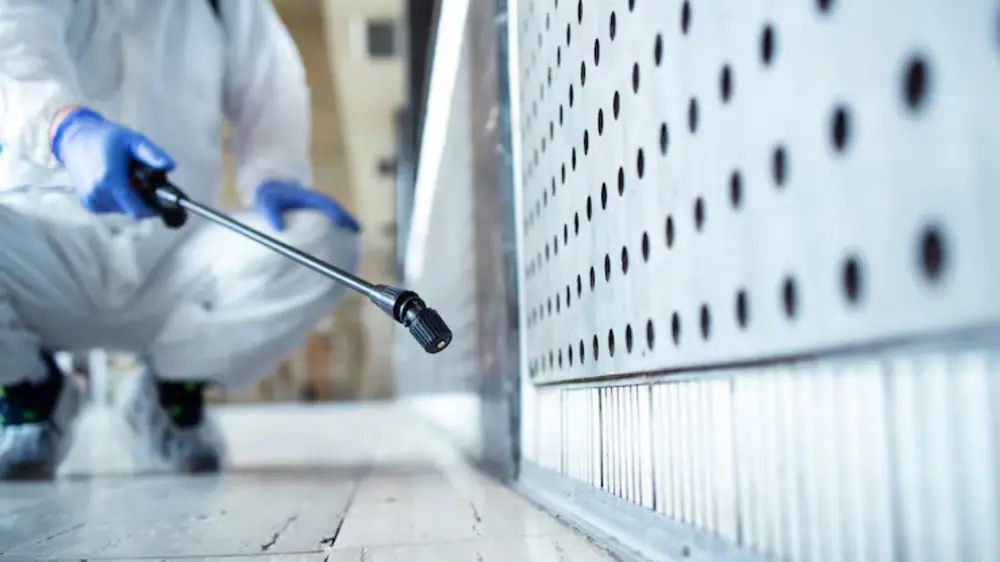
Disturbing mold sends spores and dust into the air. A crew working to the ANSI/IICRC S520 standard seals off the opening to the living space with plastic sheeting, runs a HEPA air scrubber and often holds the work area under negative air so airflow moves toward the crawl space, not the house.
Ask any company whether its crews follow S520, and what the containment plan is before work starts. Ask also how clearance will be shown. Surface sampling after the work may help show an area was adequately cleaned, according to the EPA.
Fix the cause, or it comes back
No cleanup lasts if the moisture stays. We cannot promise mold will not return, and no honest company can. What you can do is reduce the odds. Repair plumbing leaks fast, as the EPA advises, and insulate cold water pipes to limit condensation.
Redirect downspouts away from the foundation and have a contractor assess grading. Replace or repair the vapor barrier and ask about vent options. In Sherman Oaks, where the Los Angeles River runs along the northern edge in a concrete-lined channel, we treat a damp low area as a question to answer with readings, not an assumption.
Is it safe to go into the crawl space myself?
Only after confirming there is no standing water near wiring and no sewage. Crawl spaces are cramped, so wear gloves, eye protection and a proper respirator, and tell someone you are going in. If in doubt, stay out and call.
Does a damp crawl space mean mold?
Not always, but damp wood is where mold can start. Visible growth means moisture has been present for a while. Moisture readings tell you whether the area is still wet.
Can I put a fan or dehumidifier down there?
A dehumidifier can help once the leak is stopped and standing water is gone. It will not fix a source problem. Do not run extension cords through wet areas.
Does living near the Santa Monica Mountains mean my crawl space will flood?
No. It means water moving downhill is a real factor for some lots. If you see damp soil or standing water after rain, ask a contractor about grading and drainage and ask us for moisture readings.
Will the whole floor have to come out?
Usually not. Cleanable joists stay. Wet insulation, damaged subfloor sections and a worn vapor barrier are the likelier removals. The scope is explained before work starts.