
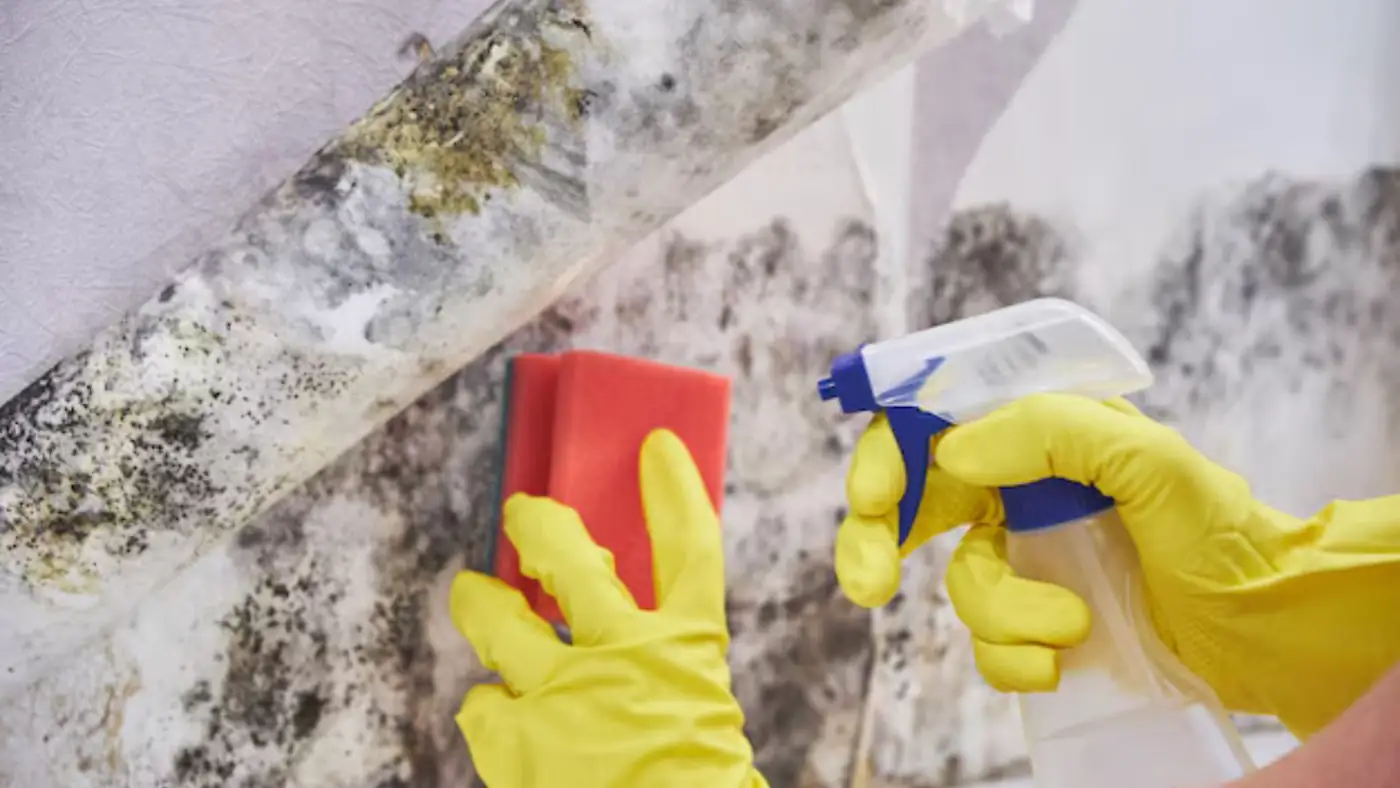
Black or green spots on a bathroom ceiling corner, a fuzzy patch behind a closet door, a musty smell near a window sill. To remove mold from walls, you clean what is on hard, sealed surfaces and cut out what has soaked into porous material. The right choice depends on what the wall is made of and how long it stayed wet.
This guide covers walls only, such as painted drywall, plaster, tile grout areas and the walls of bathrooms and closets.
Surface growth or growth inside the wall
Surface growth sits on top of paint, tile or sealed plaster. It wipes off and the wall underneath is firm. Growth inside the wall is different. The paper face of drywall is food for mold, and gypsum soaks up water like a sponge.
Signs of trouble inside: paint that bubbles or peels, drywall that feels soft when pressed, a stain that returns after cleaning, a smell that stays when the surface looks clean. A moisture meter helps, and a thermal camera can show cold damp zones.
Colour does not identify what you have. Black, green or white growth all need moisture, and all get the same decision: clean it or remove it.
The 10 square foot rule of thumb
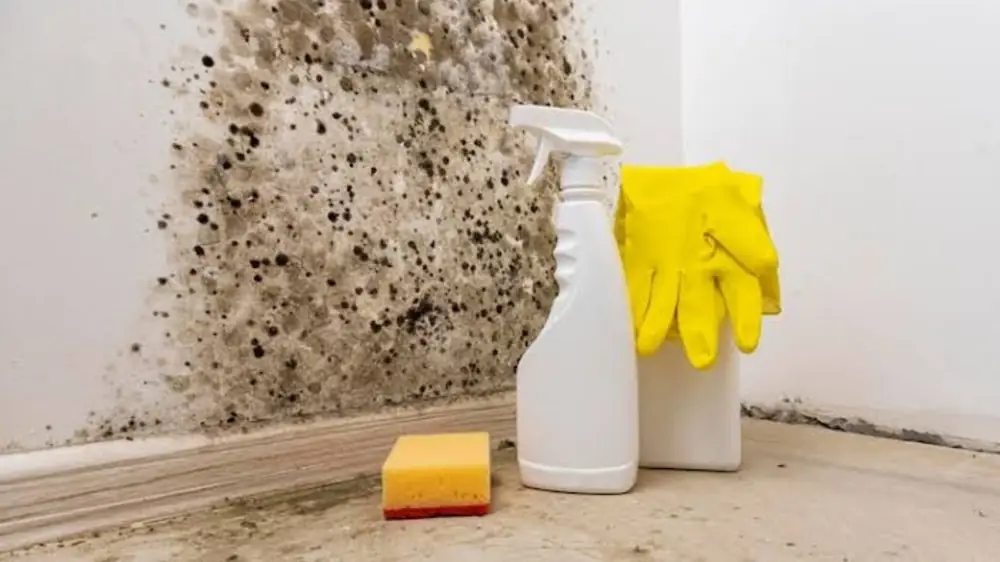
EPA says that for an area smaller than about 10 square feet, a homeowner can usually handle the cleanup. For larger areas, heavy water damage, or sewage and other contaminated water, EPA points to professional help and its remediation guide.
Ten square feet is roughly a patch three feet by three feet. That is a rule of thumb, not a permission slip. If the cause is a leaking pipe inside the wall, size does not matter, because the moisture source needs a pro.
| Wall condition | DIY or professional | Why |
|---|---|---|
| Small spots on painted, firm drywall, under about 10 square feet. | DIY is reasonable. | Hard sealed surface cleans with detergent and water, then dries. |
| Mold on tile grout in a shower. | DIY is reasonable. | Hard surface, but fix the ventilation or leak. |
| Drywall soft, bubbled or stained from a leak. | Professional. | Wet gypsum usually has to be cut out and dried behind. |
| Patch larger than about 10 square feet. | Professional. | EPA points to professional help for larger areas. |
| Mold after sewage or contaminated water. | Professional. | Contaminated water needs controlled removal. |
| Spot keeps returning after cleaning. | Professional. | A hidden moisture source is likely. |
When in doubt, stop and have the wall opened and read with a moisture meter.
Cleaning hard surfaces with detergent and water
On sealed paint, tile and glazed surfaces, EPA advises scrubbing with detergent and water and drying completely. That is the whole method. Use a soft brush or cloth, work in small sections, and rinse the cloth often so you are not spreading growth.
Dry the wall afterward with a fan or a towel. Leaving it damp invites regrowth. Do not mix cleaning chemicals, since combining them can release dangerous fumes. Plain detergent and water is the EPA approach.
Wall soft or the spot keeps returning?
Call (818) 337-2642 any hour. Same-day response when available.
Why wet drywall usually gets cut out
Drywall that stayed wet for more than a couple of days is hard to save. EPA says absorbent or porous materials such as ceiling tiles and carpet may have to be thrown away if they become moldy, and drywall behaves the same way.
A crew marks a clean cut line about a foot or more past the visible edge of damage. They score and remove the panel in sections and bag it. They also check the insulation and the back of the next panel, since moisture travels up and sideways.
Plaster on lath is tougher but not immune. If it is crumbling or the lath is stained, a pro should assess it.
Protective gear and dust control in plain terms
- Wear an N95 respirator or better, safety glasses and rubber gloves.
- Close the room door and tape plastic sheeting over doorways and vents.
- Run a box fan blowing out a window to push air outside, not into the house.
- Mist the area lightly before scrubbing so dust stays down.
- Use a HEPA vacuum, not a household one, for loose debris.
- Bag waste in heavy plastic and close it before carrying it through the house.
Skip dry brushing and sanding on walls. They throw fine dust into the air and spread growth beyond the spot.
Find the moisture source first
Check the exterior wall
Look for roof flashing gaps, cracked stucco or a gutter dumping at the wall.
Check the plumbing wall
Look at the wall behind a toilet, tub, washer or sink for stains and soft paint.
Check the window sill
Condensation or a failed seal drips down and soaks the wall below.
Check the air
A bathroom with no working fan holds steam. EPA suggests exhaust fans and keeping humidity below 60 percent.
EPA says the key to mold control is moisture control. Cleaning without fixing the source gives you a clean wall for a few weeks. Once the source is fixed, a water damage repair crew can close up the opening, texture and paint.
Apartments, condos and older houses nearby
In Valley Village, the 2006 count was about 1,073 condos and 8,213 apartment units alongside roughly 3,881 single-family homes. If you rent or own a unit in a shared building, report leaks and moisture to the building owner or HOA right away. EPA says renters should do this, and a leak inside a shared wall may not be yours to open.
In Burbank, more than 62 percent of housing was built before 1970. Older walls may have decades of repainted stains, so a spot that returns after cleaning in an older house often points to a slow plumbing or roof leak behind it.
When to stop and call
- The patch is bigger than about 10 square feet.
- The drywall is soft or the wall sags.
- The growth returns within weeks.
- You found it after a plumbing leak, roof leak or sewage backup.
- Anyone in the home has health concerns. Ask a physician about those.
Our crews follow the ANSI/IICRC S520 standard for mold remediation. Ask any company whether its crews do. Scope and price are explained before work starts.
Can I paint over mold on a wall?
No. Paint covers the stain but leaves the moisture and growth in place. Clean or remove it, dry it and fix the source first.
Is bleach the answer for mold on drywall?
EPA's guidance for hard surfaces is detergent and water. Drywall is porous, so surface cleaning does not reach inside it. Never mix cleaning chemicals.
How do I know if mold is inside the wall?
Soft drywall, bubbling paint, a stain that returns and a lingering smell are signs. A moisture meter reading confirms damp material.
I live in an apartment near Ventura Boulevard. What do I do?
Report the leak or moisture to your landlord or HOA right away, in writing. Take photos. Do not open walls in a shared building yourself.
Does a clean wall mean the mold will not return?
No one can promise that. It stays away only if the wall stays dry, so fix the leak and manage humidity.