
The first two days decide most of it
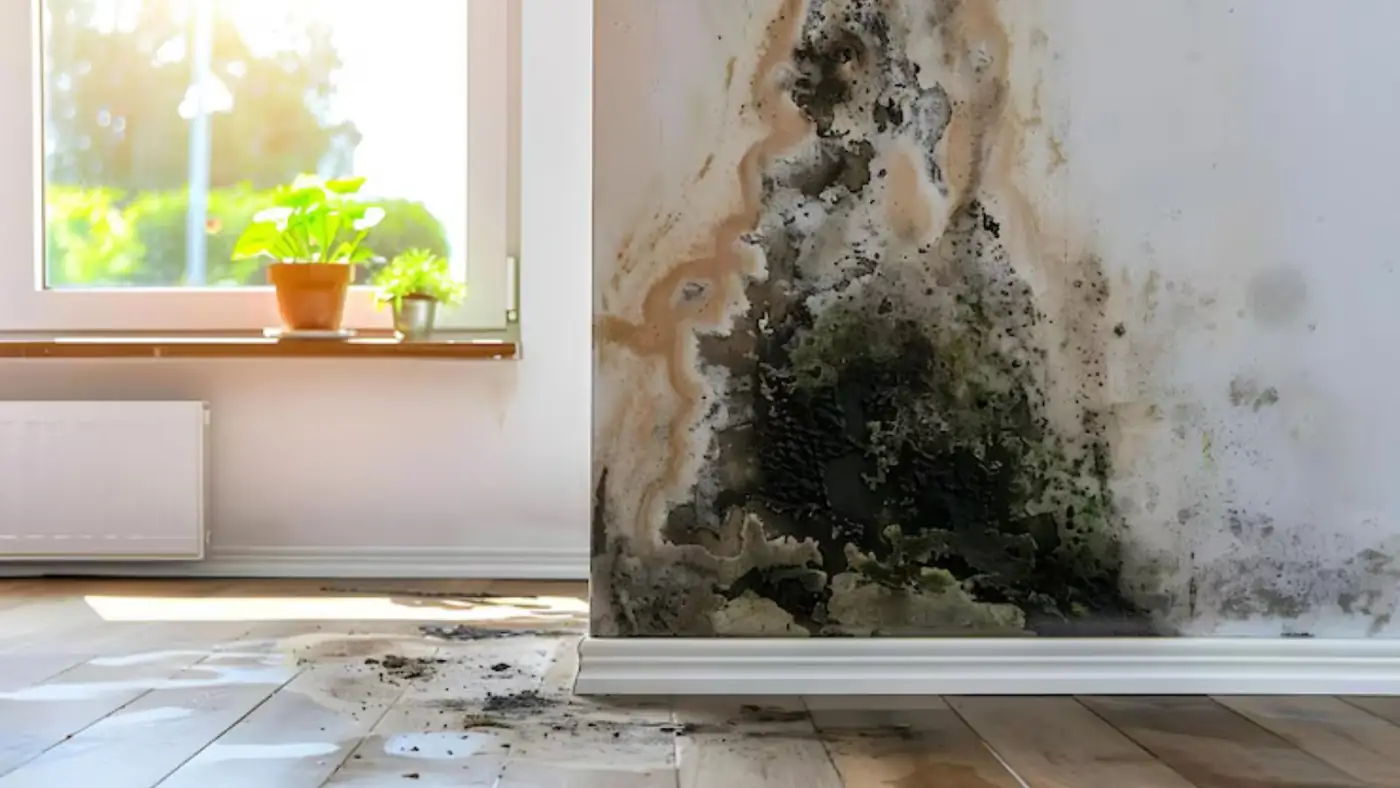
A pipe let go on Friday, you mopped up, and by Sunday the room smells like a damp basement. That smell is often the first sign that mold after water damage is getting started. The EPA puts it simply: the key to mold control is moisture control. No type of mold grows without water.
The EPA also says to dry water-damaged areas and items within 24 to 48 hours, and that mold usually will not grow if wet areas are dried in that window. After that, the odds shift. The goal is not to chase mold. It is to get wet materials dry before it can start.
A typical timeline after a leak or flood
Hours 0 to 4
Stop the source, remove standing water and take moisture readings. Wet carpet pad and soaked insulation are flagged early, since they hold water.
Day 1
Extraction finishes, wet baseboards may come off, and air movers and an LGR dehumidifier go in. Wall cavities are checked with a moisture meter.
Days 2 to 5
Readings are repeated daily. Three to five days of drying is typical for many jobs, longer for thick framing, hardwood or a ceiling cavity.
Dry standard met
Equipment comes out only when readings match a dry reference material. If anything still reads wet, drying continues.
Every job differs with the amount of water, the materials and the season. This is a rough outline, not a promise. If you want your own situation explained, our crews doing water mitigation can walk through the readings with you.
Signs that moisture is still trapped
- A musty or earthy odor that returns after you air the room.
- Paint that bubbles, peels or shows a tide-line stain that keeps growing.
- Baseboards pulling away from the wall, or oak strip flooring that cups or crowns.
- Drywall that feels soft or cool to the touch at the bottom few inches.
- Windows that fog or a room that stays muggy with no cooking or showers. The EPA suggests keeping indoor humidity below 60 percent, ideally between 30 and 50 percent.
A surface can feel dry while the cavity behind it is not. That is why a moisture meter and a thermal camera earn their place. Touch is a poor test.
Hidden places water settles
Behind baseboards
Water wicks into the bottom of drywall and sits behind the trim. Paint hides it for weeks.
Under cabinets
A toe-kick and a particleboard cabinet floor trap water from a dishwasher or sink line.
Inside wall cavities
Insulation and the bottom plate of a wall can stay wet long after the surface looks fine.
Ceiling voids
Water from an upstairs bathroom or an attic unit pools above the drywall and soaks the insulation.
Under flooring
Laminate, vinyl and hardwood trap moisture against the subfloor, where it dries slowly.
Not sure how wet it still is?
Call (818) 337-2642. We measure first and explain the plan before work starts.
Why a sudden water event moves fast in Studio City
In 2026 an 8-inch cast-iron water main burst on Coldwater Canyon Avenue near Woodbridge Street. Water flooded the roadway, part of the road crumbled, and LADWP shut off water to roughly 40 to 60 customers while crews made repairs. News reports said no immediate property damage was reported.
We use it as an example of how fast a sudden water event unfolds, not as a damage report. The practical lesson is the clock. When water reaches a home, even in a small amount, the 24 to 48 hour window starts at that moment, so photograph and begin drying the same day.
Moisture has a long local history too. Early orchards in North Hollywood relied on a high water table near Tujunga Wash. If a ground-level room stays damp after the leak is fixed, ask the crew to check for a second source before you rebuild.
What drying proves, and what it does not
Drying is measured, not guessed. A crew compares readings in the wet area to a dry reference material in the same house, and records each visit. When the wet readings match the reference, drying is done and a written log shows it.
That log proves materials were dry when equipment left. It cannot prove mold will never appear, because new water can arrive later. If a new leak shows up months on, treat it like a new loss and start the clock again.
When mold testing is and is not needed
The EPA says that in most cases, if visible mold growth is present, sampling is unnecessary. No federal limits have been set for mold or mold spores, so a lab number has no pass or fail line to compare against. Color does not identify a mold type either, so do not judge by black, green or white.
Surface sampling may help show whether an area was adequately cleaned or remediated. That is a narrow use, after the work is done. If you are weighing a test, ask what question it would answer and what you would do with the result. Questions about health belong with a physician.
What happens next if mold is found
For mold on a hard surface smaller than about 10 square feet, the EPA says a homeowner can usually handle it by scrubbing with detergent and water and drying completely. Porous items like ceiling tiles and carpet may have to be thrown away if they become moldy.
For larger areas, heavy water damage or sewage, the EPA points to professional help. A crew working to the ANSI/IICRC S520 standard sets up containment, uses HEPA air scrubbers and removes affected porous material. The source of moisture must be fixed, or the work does not last. See our mold remediation page for how that process runs.
In Valley Village, about 8,213 apartment units stood beside roughly 3,881 single-family homes in 2006. A leak in one unit can wet the ceiling below, so tell the building manager the same day. Renters should report leaks right away.
Is it too late if 48 hours have passed?
No. The 24 to 48 hour window is when mold usually will not grow, not a cutoff for action. Materials that are still wet should still be dried, and anything already moldy gets assessed.
Can I just bleach the visible mold?
For a small area on a hard surface, the EPA describes scrubbing with detergent and water and drying completely. Bleach does not fix the moisture. If the area is large or the wall was wet inside, call a professional.
Do I need a mold test after a leak?
Usually not when mold is visible. The EPA says sampling is typically unnecessary in that case. Testing can help confirm cleanup afterward. Ask what a test would change before paying for one.
Does a street water main break nearby mean my home is at risk of mold?
Only if water reached your property. The Coldwater Canyon Avenue main break in 2026 did not produce reports of property damage. If water does enter any home, start drying and photographing at once.
How do I know the wall cavity is dry?
Ask for dated moisture readings taken at several heights, and a comparison to a dry wall in the same house. A surface that looks dry says little.