
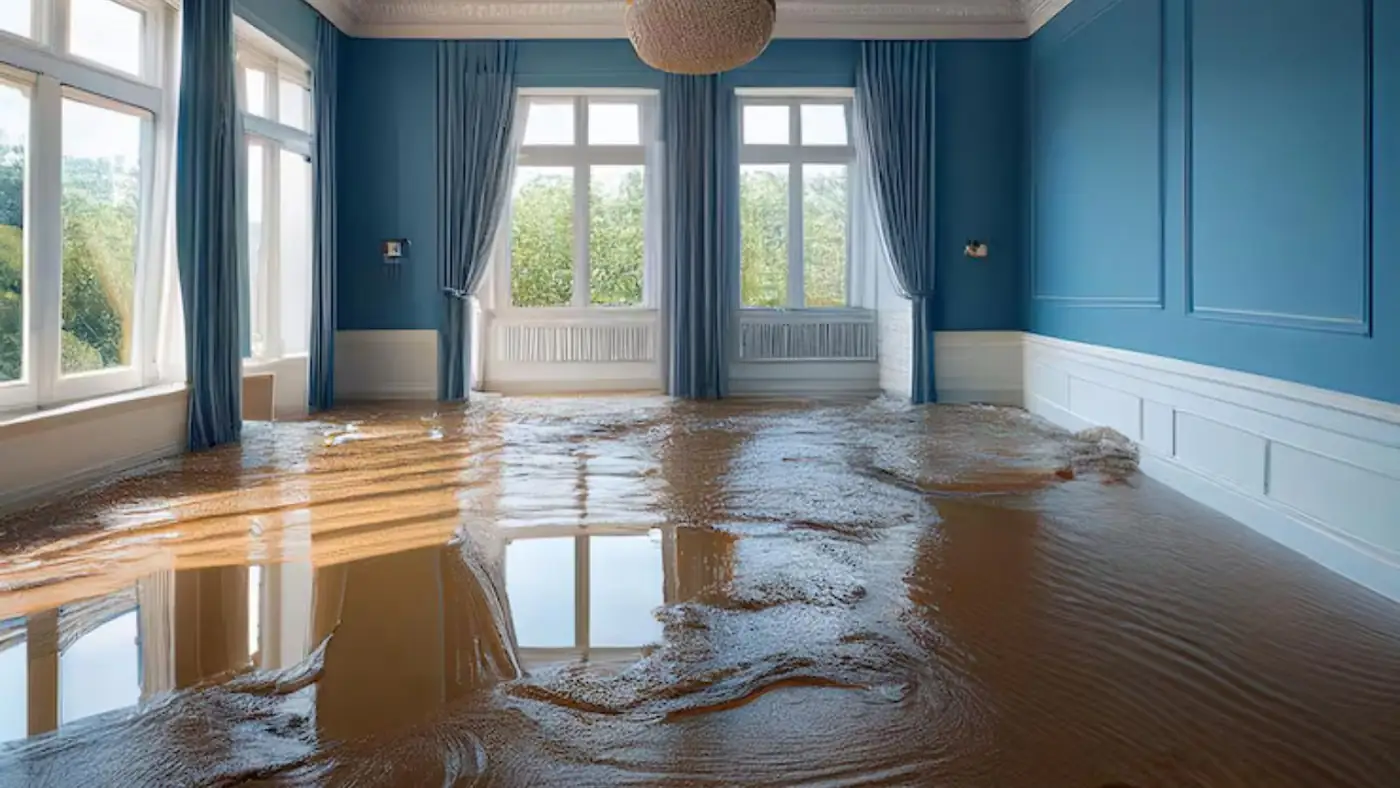
The baseboard has bubbled paint. The bottom of the door jamb is dark, and the cabinet under the sink sounds hollow. To repair water damaged wood you first have to learn whether the wood is only wet and stained, or whether it has gone soft.
This post covers wood that is not flooring: trim, jambs, window sills, cabinets, framing studs and joists, furniture and decks. Solid hardwood floors have their own rules.
Stained or soft, the difference that matters
Staining is a color change. Water darkens wood and lifts tannins, and the board can still be solid. Soft rot is a loss of strength, where wood fibers have broken down after long, repeated wetting.
A stained board that is dried can often stay. A rotted one cannot hold nails or take load, and no paint changes that. The job is telling them apart without guessing from looks, and that takes a probe, a moisture meter and a little patience.
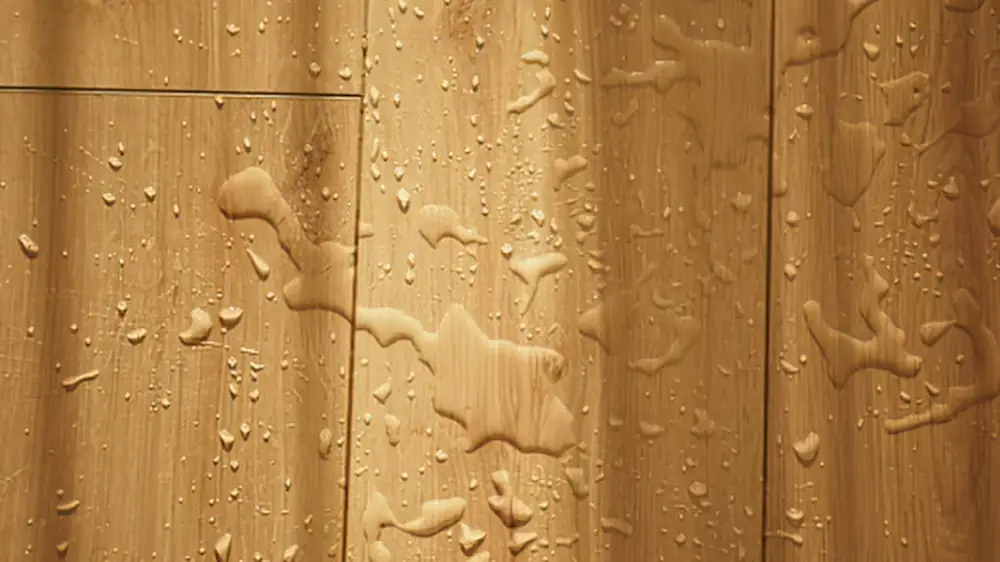
The probe test, done safely
A screwdriver or awl pressed into the wood tells you a lot. Sound wood resists and the tool leaves a small dent. Rotted wood gives easily, crumbles, or pulls out in stringy or cubical pieces.
Wear gloves and eye protection, and push gently, away from your hand. Probe at the lowest point of the board, at joints, and near fasteners, since those spots stay wet longest. Do not probe where water has reached outlets or wiring, and stay out of standing water.
- Test several spots, not one. Rot can hide next to firm wood.
- Do not dig deep into structural framing. A small probe is enough to learn what you need.
- Paint on older trim may contain lead. Avoid dry scraping or sanding it, and ask a contractor how they handle it.
- If a joist or stud feels soft at the end or bottom, stop and call. That is a structural question.
Dry and keep, or cut out
The decision depends on the material and the job it does. Here is how it usually breaks down.
Baseboard and trim
Usually cheap to replace. If it is wet but solid, drying behind it matters more than the board, so crews often pull a section to dry the wall cavity.
Door jambs and window sills
Often kept when firm. Soft bottoms of jambs are cut back and spliced, because they are hard to match as a whole piece.
Cabinets
Solid wood boxes can dry and stay. Particleboard swells, loses its strength and usually has to be replaced.
Framing studs and joists
Wet framing is usually dried in place and checked. Soft framing is repaired or sistered by a qualified contractor, not a weekend fix.
Furniture and decks
Solid wood furniture can often be dried and refinished. Decks need probing at every joint, since rot hides at the underside.
Epoxy consolidants versus replacement
Consolidants are thin epoxy liquids that soak into slightly softened wood and harden it. Filler epoxies rebuild small missing areas. They are used on window sills, trim and some exterior pieces where replacing would be hard.
They are not for structure. If a stud, joist or beam has lost strength, a patch is not the answer. Wood that is only a little soft at a corner may be consolidated. Wood that crumbles through its width should be replaced.
What drying does to swelling
Wood swells as it absorbs water and shrinks back as it dries. Solid wood trim often returns close to its original size if it dries slowly and evenly. Particleboard and MDF swell permanently and do not return.
Dry the wood before painting or sealing it. A moisture meter, air movers and a dehumidifier get the job done, and covering wet wood only traps water. Gentle, steady drying prevents checking and splitting, which are the small cracks and splits that open when wood dries too fast.
Old framing and the right permit office
More than 62 percent of Burbank housing was built before 1970, and Magnolia Park has homes mostly from the 1940s, built for World War II veterans. Old framing and trim have had decades of seasons, so probe before assuming any of it is sound, especially under windows and at the base of walls. Our Burbank crews check those areas with a meter and a probe before the scope is set.
Permits are also local. Burbank is its own city, so permit questions there go to the City of Burbank, while Los Angeles city permits, including Studio City, go to LADBS. Ask the right office before structural repair, or ask the city building department if you are unsure. The same goes in North Hollywood, where about three quarters of housing was renter-occupied in the 2000 census. If you rent, tell your landlord before anyone cuts framing.
Not sure if the wood is sound?
Call (818) 337-2642 and we will explain what we find before work starts.
When it is time to call a crew
Call if any structural member feels soft, if the area is large, or if the water came from a drain or sewer line. Hidden moisture inside a wall behind soft baseboard is common, and a crew can map it. We handle this under water damage repair after the area has been dried.
Ask any company whether its crews work to the ANSI/IICRC S500 standard for water damage restoration. If the water may be contaminated, stay out. If it touched outlets or the panel, cut power only if the panel is dry and safe to reach, and call 911 or the utility for electrical risk first.
Insurance, briefly
Sudden and accidental damage is often covered, while long-term seepage or neglect often is not. Photograph the wood before anything is removed, keep removed pieces if you can, and ask your insurer what applies. Coverage decisions are theirs, not ours.
Can wet baseboard be saved?
Often yes, if it is firm and dried promptly. The wall cavity behind it matters more, so a section may be pulled to dry the cavity.
Is a dark stain always rot?
No. Stains can be surface color. Probe the wood. If it resists, it may be dried and kept.
Is it safe to test wood with a screwdriver?
Yes, with gloves and eye protection, gentle pressure and a clear head. Avoid wet electrical areas and skip structural beams, which are for a professional.
Do Burbank repairs need a permit from LADBS?
No. Burbank has its own city building office. Studio City and other City of Los Angeles areas go through LADBS. Ask the right office before structural work.
My North Hollywood rental has a soft cabinet base. What should I do?
Photograph it and report it to your landlord promptly. Do not cut into framing or walls yourself.