
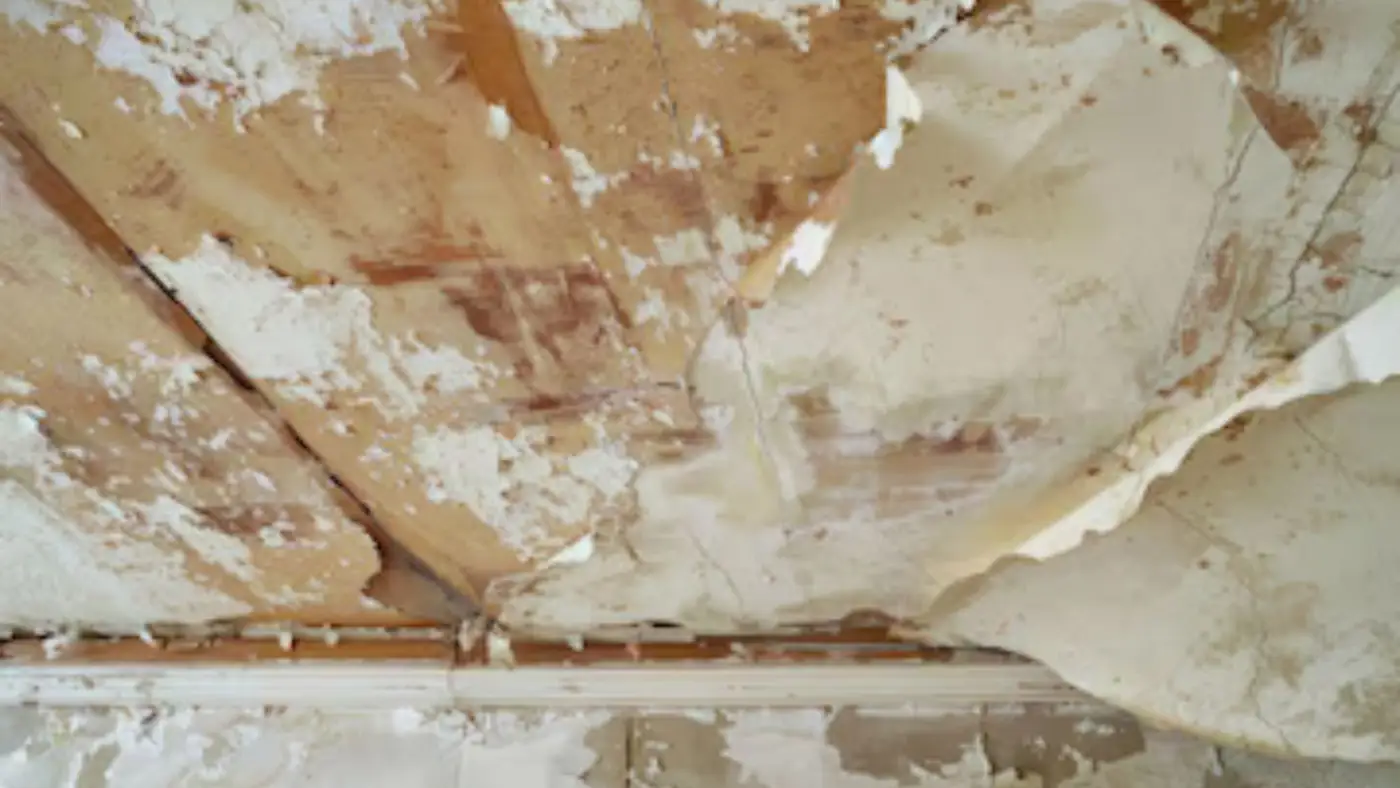
You look up and see a brown ring the size of a dinner plate, or a belly in the drywall that wasn't there last week. The cost of water damaged ceiling repair depends less on that stain than on how much of the ceiling and the space above it got wet, what the water carried, and what has to be matched afterward.
This post explains those factors so you can compare quotes sensibly. It gives no dollar amounts, because the same stain can be a small patch or a full ceiling depending on what a crew finds.
The stain is the visible part
Water travels. It runs along joists, pools in insulation, and soaks into drywall well beyond the ring you can see. A palm-sized stain can sit under a wet area many times larger.
A crew checks with a moisture meter and often a thermal camera, then opens the ceiling where readings are high. That step sets the real size of the job. Any quote made from a photo alone is a rough guess.
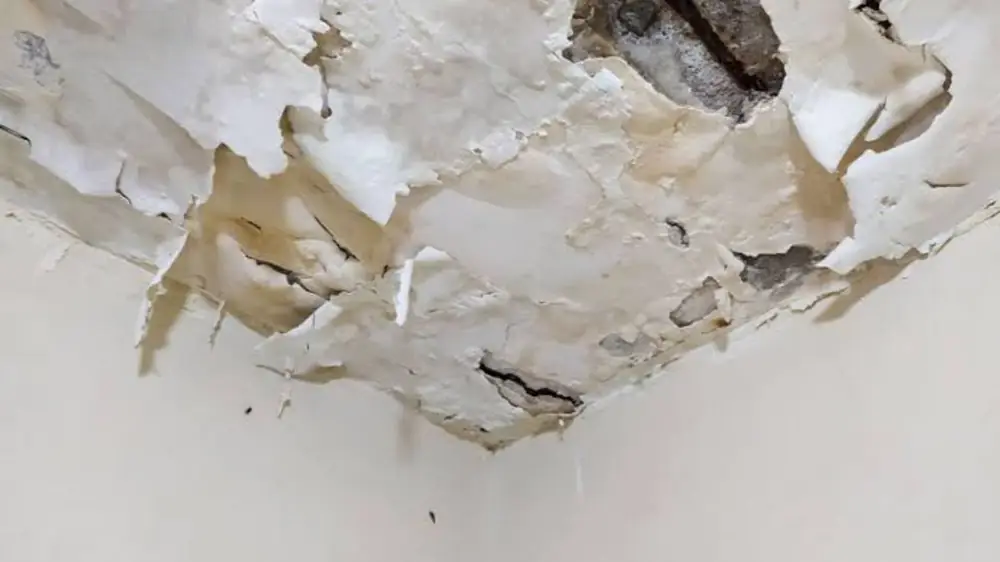
Where the water came from
The source decides whether the wet materials can be dried or must be thrown out. Clean water from a supply line, like a burst pipe, is the easiest case. Water from a drain line, a toilet or a washing machine overflow is more contaminated, and porous materials such as insulation and drywall usually come out.
Rainwater through a roof is its own case. It picks up dust and debris on the way in, and it often arrives repeatedly, so the roof repair has to happen before the ceiling repair, or the new paint will stain again.
| Cost driver | What changes the price | What to ask |
|---|---|---|
| Water category | Clean supply water allows more drying. Drain or storm water means removing porous materials | What category did you find, and how did you determine it? |
| Hidden wet area | A larger wet zone above the stain means more drywall and more equipment | Where did the moisture meter show wet, and can I see the readings? |
| Insulation | Wet batts lose their value and often must be removed and replaced | Is the insulation staying or going, and why? |
| Drywall type | Standard half-inch, thicker fire-rated and moisture-resistant boards cost and behave differently | Which board is up there and what will you match? |
| Texture and paint | Matching popcorn or knockdown is skilled work, and paint usually covers the whole ceiling plane | Will the whole ceiling be painted to avoid visible patches? |
| Access and source | Tight attics, a second-story unit, or a roof leak add steps and trades | Who fixes the source, and in what order? |
A written scope that lists each of these items is easier to compare than a single lump sum.
Insulation, drywall and what must come out
Wet fiberglass batts sag and stop insulating, and they hold moisture against the drywall. Crews usually remove wet insulation and replace it after the cavity is dry. Blown-in insulation may need to be vacuumed out.
Drywall that has sagged, softened or crumbles at the edge generally comes out. Ceilings are often 5/8-inch or 1/2-inch board, and the thickness and type must match so the new section sits flush. Cutting back to joist lines keeps the seams clean and the patch strong.
Upstairs neighbors and older Burbank housing
Valley Village had about 3,881 single-family homes, 1,073 condos and 8,213 apartment units in 2006. With that many apartments, a ceiling stain often has a neighbor's plumbing above it. Who pays depends on your lease or your HOA rules, so ask your landlord or HOA before you start repairs, and report the leak promptly. We send crews to Valley Village for stains like this.
In Burbank, more than 62 percent of housing was built before 1970. Older ceilings may use different board, plaster or older texture, and older wiring can run through the same cavity, so the opening-up step matters more. Our Burbank crews can explain what they find before the scope is set.
Ceiling stained or sagging?
Call (818) 337-2642 and we will explain scope and price before work starts.
Dry first, then repair
Painting over a wet ceiling traps moisture and invites mold. The sequence is stop the source, remove what cannot be saved, dry the cavity, confirm with a meter, then rebuild. Drying often takes a few days with air movers and a dehumidifier, and skipping it adds cost later.
If the ceiling is sagging or bulging, keep people out from under it. Water can sit in the belly of the drywall, and it may come down all at once. Poking a small hole to drain it is a job for a professional, not a broom handle.
Texture and paint drive the finish cost
Popcorn and knockdown textures are hard to match by eye, so crews often blend the texture across a larger area. Smooth ceilings are simpler to patch but show every flaw in flat light.
Paint is almost always applied across the entire ceiling plane, from wall to wall, because spot painting leaves a visible halo. Older textured ceilings may need testing before they are disturbed, so ask the contractor how they handle it.
Upstairs units, roofs and access
If the water came from the unit above, repairs may require coordinating with that owner or tenant, and the leak must be fixed first. If it came from the roof, you may need a roofer and a restoration crew in sequence. Emergency water removal comes first when water is still pooling or dripping.
Insurance matters here. Sudden and accidental damage is often covered, while gradual leaks are often not, and flood is usually excluded. Check your policy or ask your insurer, and photograph the damage before anyone cleans it.
Why does a small ceiling stain sometimes mean a big repair?
Because water spreads in the cavity above. Wet insulation and drywall can extend well past the ring on the paint. A meter or thermal camera shows the real size.
Should I paint the stain with stain-blocking primer and move on?
Only after the leak is fixed and the ceiling is fully dry. Primer on a wet ceiling hides the problem and can trap moisture.
Why do quotes for the same ceiling differ?
They may assume different water categories, different amounts of insulation removal, or different texture and paint scopes. Ask for each item in writing.
The leak is from the unit above mine in Valley Village. Who pays?
It depends on your lease or HOA rules. Ask your landlord or HOA, report the leak right away, and keep photos and dates.
My Burbank home was built before 1970. Does that change the repair?
It can. Older ceilings may be built differently, so the crew should open the area and describe what they see before settling the scope.