
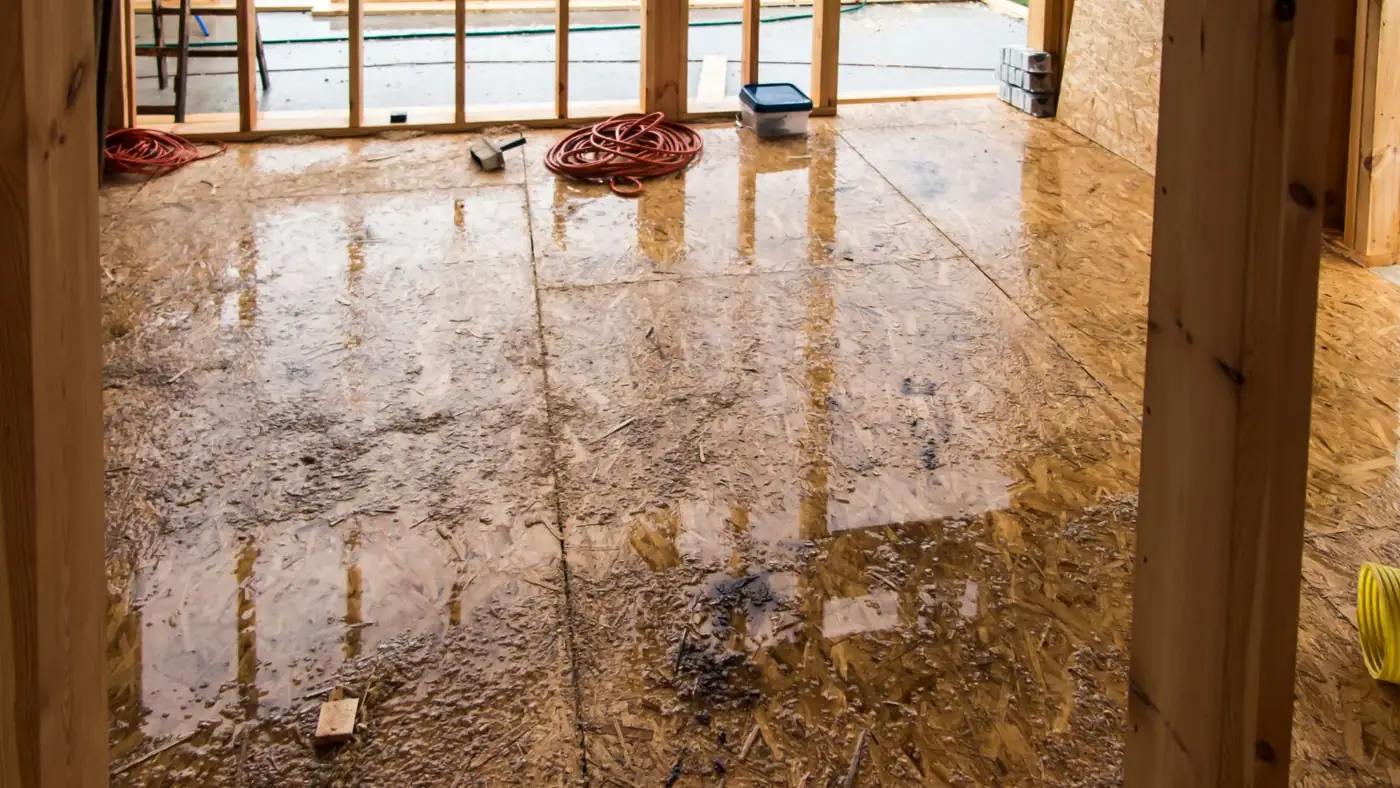
You find water on the kitchen floor, mop it up, and the planks look fine by evening. Two days later a corner lifts and there is a musty smell. Wood floor water damage is often worst where you cannot see it, particularly with engineered wood, laminate, luxury vinyl plank and other floating floors.
The first 48 hours matter because EPA says to dry water-damaged areas within 24 to 48 hours to prevent mold growth. This post is about what to do in that window and which floors are most at risk.
What to do in the first 48 hours
Stop the water
Fix the source or shut off the supply. Clear the floor of rugs and furniture.
Take photos
Capture wide and close shots, the source, and any labels on the flooring, before anything moves.
Lift and ventilate
Remove standing water and open the area to dry air. Keep foot traffic down.
Call for readings
Have a crew measure the planks, the subfloor and the slab, instead of trusting how the surface feels.
If water reached outlets or the panel, stay out and cut power only if the panel is dry and safe to reach. Call 911 or the utility for electrical or gas risk before calling us. Sewage in the water means stay out and call.
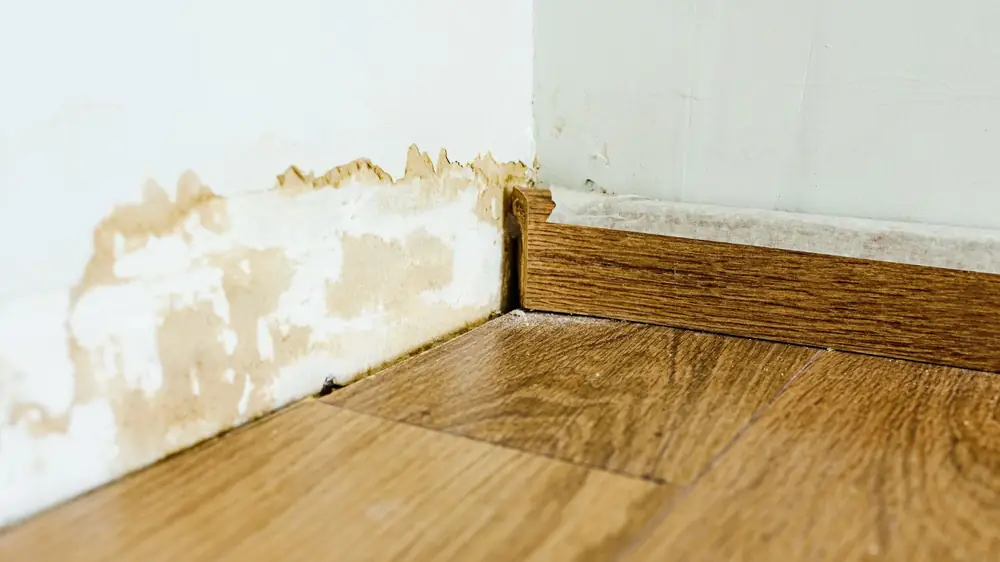
How water behaves in each floor type
| Floor type | How water behaves in it | Drying outlook |
|---|---|---|
| Site-finished solid wood | Soaks into the boards and swells, and cups from the underside. | Often dries in place over days to weeks with controlled drying, though some boards may be lost. |
| Engineered wood | Water enters at seams and edges and swells the plywood core layers. | Mixed. Mild cases dry with mats. Delaminated or warped planks usually need replacing. |
| Laminate | Fiberboard core swells and does not return to size. | Poor once swollen. Planks are usually replaced, though the subfloor still needs drying. |
| Luxury vinyl plank | The plank itself is water resistant, but water slips under it through seams. | The planks may be reusable, but the layer below must be dried. |
| Floating floors of any kind | Water spreads under the whole floor, pooling over the underlayment. | Depends on pulling a few boards to open the floor and check below. |
A floor can look intact while the underlayment and subfloor stay wet.
Why floating floors trap water between layers
A floating floor is not nailed or glued down. It sits on an underlayment, with a tight click-lock joint on top. That joint keeps spills out, but once water gets in at a seam or edge, it has no easy way out.
The planks, the underlayment and the subfloor form three layers with a thin film of water between them. Air does not reach it, so the top may feel dry while the bottom stays wet. This is why mopping does not finish the job.
Drying mats and pulling a few boards
Drying mats sit on the floor and pull moisture through it with suction. They work well on some hardwood and engineered floors that can be saved. Floating floors often need a few boards pulled so air can reach the underlayment and subfloor.
Pulling boards starts at a wall and works across. Crews label planks so they can be reinstalled. Click-lock floors can sometimes be lifted and relaid when the planks are in good shape. Glued floors are harder.
A pipe leak is not a flood
The Los Angeles River forms Sherman Oaks' northern edge as a concrete-lined channel. That matters here only as a reminder that heavy storm runoff is a different problem from a pipe leak. A burst supply line is usually sudden and accidental, while flood damage is usually excluded from homeowners policies. California Department of Insurance says flood coverage comes through the National Flood Insurance Program, and a new policy generally takes effect 30 days after purchase.
If you live near the channel in Sherman Oaks, check your policy before storm season and ask your agent about flood coverage. Hillside homes should also watch for runoff from canyon roads. For storm water in the house, see flood damage restoration.
Floor wet right now?
Call (818) 337-2642 and we will explain the plan before work starts.
Checking the subfloor and slab with a moisture meter
A moisture meter reads the planks, the plywood or OSB subfloor, and on slab homes the concrete. Crews compare those numbers to a dry reference spot in the same house. A pinless meter scans without making holes, and a pin meter confirms in the wood.
On a slab, moisture can rise through the concrete. Crews may use a separate concrete test and look for water coming up at cracks or edges. A subfloor that stays wet after the planks are lifted is the reason to keep drying going.
What to photograph
- The source of the water, such as the broken fitting, the appliance or the roof drip.
- Wide shots of each affected room, then close shots of lifted edges and stains.
- The flooring label, brand and any receipts, which help describe the product.
- Moisture meter readings, if a crew takes them, with the date.
- Anything damaged, such as furniture and baseboard, before it moves.
Keep photos in one folder with dates. They help when you talk to your insurer, who decides coverage. Check your policy, and note that sudden and accidental damage is often covered while gradual leaks often are not. We reach Encino homes through our Encino crews, where about 61.6 percent of housing was owner-occupied in the 2000 census era source, so most readers there handle the insurance call themselves. Renters should tell the landlord right away.
Ask any company whether its crews work to the ANSI/IICRC S500 standard. After drying, we handle repairs under water damage repair.
Can I keep my laminate floor after it gets wet?
Rarely. Laminate cores swell and do not return. The subfloor beneath still needs drying either way.
Is luxury vinyl plank waterproof?
The planks resist water, but water can pass between them and sit on the subfloor. The floor can look fine while the layer beneath is wet.
Why pull a few boards?
To see and dry what is underneath. It lets air reach the underlayment and gives a crew a clear look at the subfloor.
Does a pipe leak in Sherman Oaks count as flood damage?
Usually not. A burst pipe is sudden and accidental, while flood from storm runoff is typically excluded. Ask your insurer how your policy treats each.
How soon should drying start?
EPA says to dry water-damaged areas within 24 to 48 hours. If you can, start immediately and call a crew for readings.